0days left

Business Travel Service
Sightseeing
Top 10 tourist attractions in Shaanxi Province:
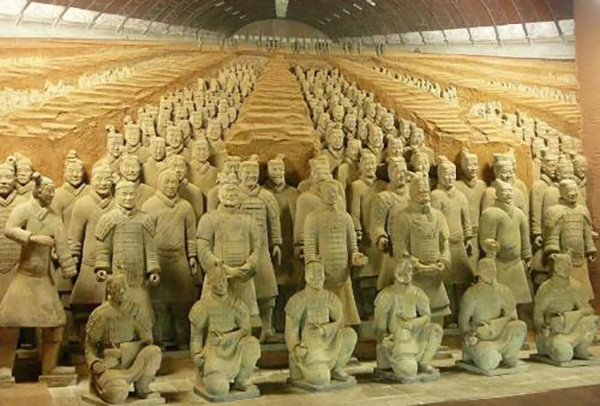
1. Terracotta Warriors of Qin Shihuang
The eighth wonder of the world. In 1974, the discovery of the terracotta warriors and horses pit of Qin Shihuang shocked the world. This underground sculpture group built in the 3rd century BC shows the splendid splendor of ancient Eastern culture with magnificent majesty, majestic military formations, and realistic figurines. Qin Shihuang Terracotta Warriors and Horses Museum is the largest site museum in my country. In addition to the protection exhibition halls of Pit No. 1, Pit No. 2 and Pit No. 3, there are also the exhibition hall of cultural relics unearthed from the Terra Cotta Warriors and the Qinling Bronze Horse and Horse Showcase.
2. Big Wild Goose Pagoda
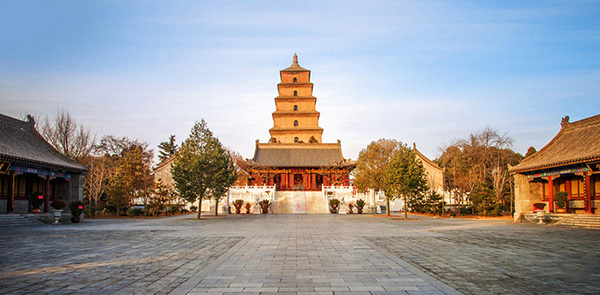
The Wild Goose Pagoda is located in Ci'en Temple, 4 kilometers outside the Heping Gate. Legend has it that Xuanzang Master who went to India to learn from Yonghui in the Tang Dynasty for three years. Zuo please build a pagoda in the temple to store the books he brought back from India. This giant wild goose pagoda with a history of more than 1,300 years is towering and tall and has become a unique symbol of the ancient city of Xi'an. It is an excellent example of the Chinese pavilion brick tower.
3. Huashan
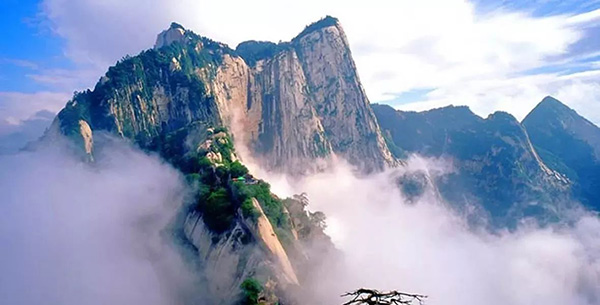
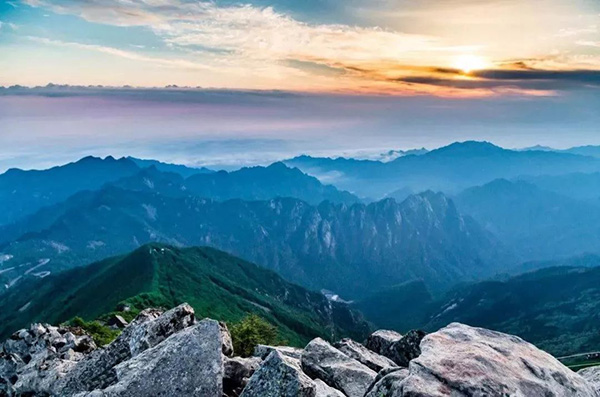
Huashan, anciently known as "Xiyue", is one of China's famous Wuyue, with an elevation of 2154.9 meters, located in Huayin City, Weinan City, a historical and cultural hometown 120 kilometers east of Xi'an, Shaanxi Province, to the north is the flat Weihe River Plain and the roaring Yellow River, south According to Qinling, it is a granite mountain on the north side of Qinling's branch veins. With the change of nature, Huashan's various poses are vividly and vividly outlined, known as "the most dangerous mountain in the world".
4. Datang Furong Garden
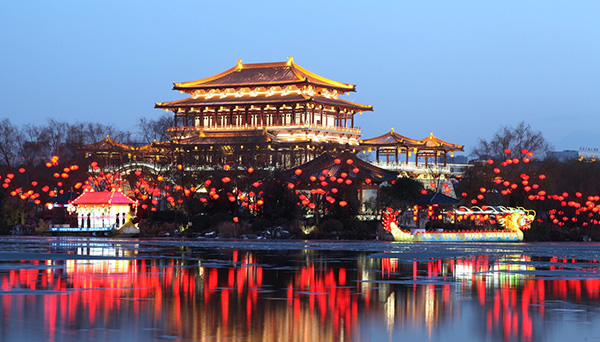
Datang Furong Garden is located beside the big wild goose pagoda in Xi'an, the ancient capital. It is China's first large-scale royal garden-style cultural theme park that displays the style of the prosperous Tang Dynasty in an all-round way. The brilliant civilization of Tang Shengshi. It covers an area of 1,000 acres, of which 300 acres of water, with a total investment of 1.3 billion yuan, has set a number of records, has the world's largest water performance, and is the first "five senses" (that is, sight, hearing, smell, touch, taste) theme park; has The world's largest outdoor fragrance project; it is the country's largest Tang-like royal architectural complex, which integrates Chinese gardens and architectural art.
5. Huaqing Pool
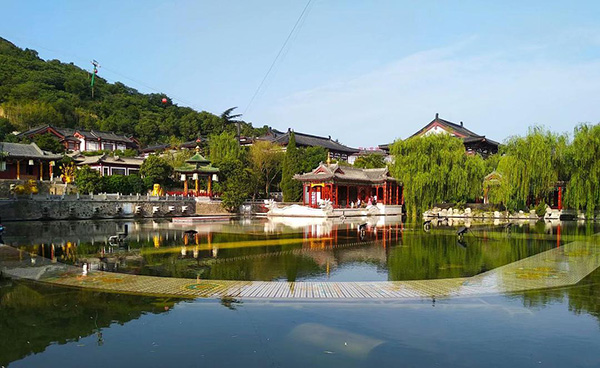
Huaqing Pond is a royal palace on the site of Tang Huaqing Palace, 30 kilometers away from Xi'an in the west, Lishan Mountain in the south, and Weishui in the north. Because of its ever-changing hot spring resources, the love story of Emperor Tang Ming and Yang Guifei, the place where the Xi’an Incident happened and the rich cultural and historical resources, it has become a famous cultural tourism scenic spot in China, a national key cultural relics protection unit, and the first batch of national AAAAA tourist demonstration scenic spots. . Huaqing Pond integrates human history and natural landscape, and the emperors of Zhou, Qin, Han, Sui, Tang and other dynasties built the Ligong Bieyuan here. The scenic area imitates Tang architecture with magnificent atmosphere and unique garden scenery. There are mainly Tanghua Qinggong Yutang Ruins Museum, Xi’an Incident Site, Jiulong Lake and Furong Lake Scenic Area, Tangliyuan Ruins Museum, Fei Shuang Hall, Zhaoyang Hall, Changsheng Hall, Huan Garden and Yuwang Hall and other iconic buildings There are Huaqing Yutang (Boutique) hotels mainly experiencing Lantang Hall, Yutang Garden, Xingchen Garden, Shangshi Garden, Changtang Garden, Shaoyang Garden, Xiangning Pavilion and Yushan Pavilion. The large-scale historical dance drama "Song of Everlasting Sorrow", launched in April 2007, has become a successful model of China's tourism cultural creative industry. The multimedia video drama "Xuanjing Longevity Palace" launched in May 2012 has become a new model for the digital transformation of traditional museums.
6. Tomb of the Yellow Emperor
The Mausoleum of the Yellow Emperor is the tomb of the Yellow Emperor Xuanyuan, the ancestor of the Chinese nation. It is located on the top of the bridge mountain 1 km north of Huangling County, Shaanxi Province, and is known as the "first mausoleum in the world". The bridge mountain where the Yellow Emperor Mausoleum is located has a total area of more than 8,500 acres. It is surrounded by water, and it faces the Yintai Mountain in the south. There are more than 80,000 ancient cypresses on the mountain and more than 30,000 ancient cypresses over 1,000 years. It is the largest ancient mountain in China. Baiqun. The Yellow Emperor Mausoleum covers an area of more than 10 acres. There is a memorial pavilion in front of the mausoleum. The tomb is 3.6 meters high and the perimeter of the cemetery is 48 meters. The ancient cypresses in the park are towering, with a solemn atmosphere. Every year at the Ching Ming Festival and the Chongyang Festival, the descendants of Yan and Huang gathered at Qiaoshan at home and abroad to hold a grand ceremony.

7. Scenic spots of the Yan'an Revolutionary Memorial
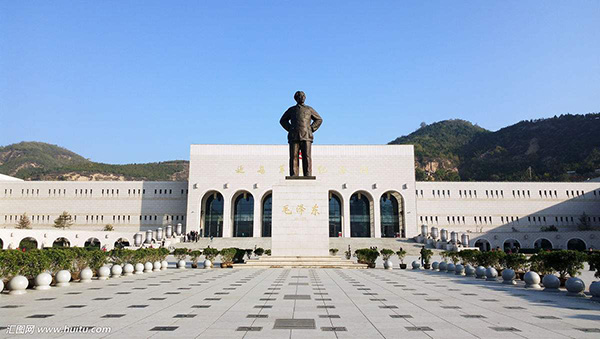
The site of the Yan'an Revolution is in Yan'an City, Shaanxi Province. From 1937 to 1947, Yan'an has been the seat of the central government and the capital of the border areas of Shaanxi, Gansu, and Ningxia, as well as the guiding center and general rear of the Chinese revolution. The Yan'an Revolutionary Old Site includes the central site of Phoenix Mountain Central Site, Yangjialing Central Site, Zaoyuan Central-Old Site, Wangjiaping Central Military Commission, the former headquarters of the Eighth Route Army, the former site of the Shaanxi-Gansu Ning Border Government, etc. It is a national key cultural relics protection unit and is famous Revolutionary site. Yan'an Revolutionary Memorial Hall The Yan'an Revolutionary Memorial Hall plays its functions of patriotism, socialism, and revolutionary traditional education with rich materials, pictures, objects, and sites. It is an important base for patriotism education.
8. Famen Temple
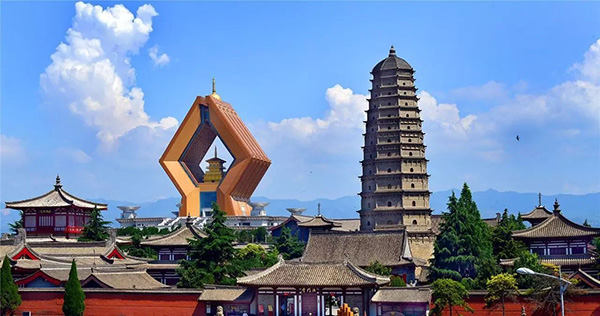
Famen Temple was built in the Eastern Han Dynasty, rises in the Sui Dynasty, and flourishes in the Tang Dynasty. It has become a holy place for Buddhism in the world because of the placement of the relics of Buddha Shakyamuni. Famen Temple Pagoda, also known as "True Body Pagoda", was originally named Ashoka Pagoda when it was first built. Tang Zhenguan was converted into a four-level wooden pagoda during the year, and then collapsed due to the earthquake. In 1579, Buddhists in Fufeng County raised money to rebuild the real pagoda, which lasted 30 years. The original wooden tower was transformed into an eight-sided 13-story brick tower. The tower is extremely spectacular, with a height of 47 meters and a total of 89 shrines from 1 to 12 floors. It is an imitation wood structure. Each floor has an eaves arch, exquisite craftsmanship and gorgeous decoration. At the bottom of the tower there are also the inscriptions, which are the words "True Body Pagoda", "Mianyang Town", "Sari Feilu", "Futu Yaori" and so on.
9. Jinsixia Scenic Area
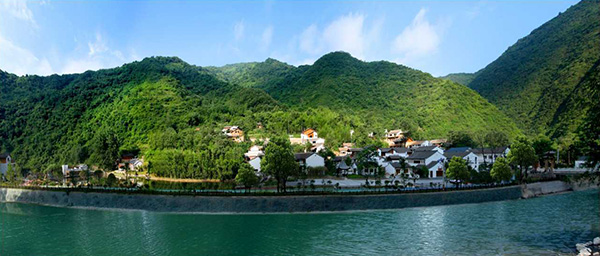
Jinsixia National Forest Park is located in Shangnan County in the southeast of Shaanxi Province and has jurisdiction over Shangluo City. It is located at the southern foot of the Qinling Mountains and connected to the northern slope of Bashan Mountain. The terrain in the territory is undulating, and the valleys are intertwined, which mainly belong to low mountain and hilly landforms. Danjiang enters Henan and Hubei from west to south. Danjiang River in Shangnan County is divided into Danbei and Dannan. Danbei is the eastward extension of Mangling and Liuling Mountains, with rounded mountains and undulating peaks; Xinkailing hinterland in Dannan, steep mountains, deep river valleys, well-developed water systems, dense forests, lush flowers and plants, high vegetation coverage, beautiful natural environment, and gold The Silk Canyon is in it. The Jinsi Grand Canyon is composed of Bailongxia, Qinglongxia, Heilongxia and Shiyanzhai.
10. Taibai Mountain Scenic Spot
Taibai Mountain is the main peak of my country's famous Qinling Mountains, with an elevation of 3767 meters, it has been a famous mountain since ancient times. The Qinling Mountain stretches more than 1,500 kilometers from east to west, spanning several provinces in China. It is known as the Dragon's Back of China, the Dragon Head of the Central Plains, the Central National Park of the Chinese, and the Father Mountain of the Chinese nation. It is the climate and geography of North and South China. , The boundary of the water system. The unique regional location and magical natural features endow the Taibai Mountain with rich and extensive natural and cultural value. It is reputed as "Asian Natural Botanical Garden", "China Natural Zoo", "World Species Gene Treasury", and "Glacier of the Fourth Season" Natural Museum" etc.
-
Exhibition Overview
Exhibition IntroductionOrganizationExhibition Range -
Exhibitor Center
Why To ExhibitScheduleBooth ReservationDownload Center -
Audience Center
Why To VisitVisit ScheduleVip Registration -
Media Center
Exhibition DynamicsPartner -
Concurrent Activities
Concurrent activities -
Business Travel Service
City IntroductionExhibition HallSightseeingTraffic Guide -
Contact Us
About UsContact Us
Copyright Guangdong ksourcing Exhibition Co. Ltd.
粤ICP备17076725号
粤公网安备44010502002796

TEL:+86 020-38109036 E-mail:eld@eldexpo.com Add:Room 2417-2420 Dongling Plaza NO.71 of Automobile City Avenue Xintang Town, Zengcheng District Guangzhou City.